
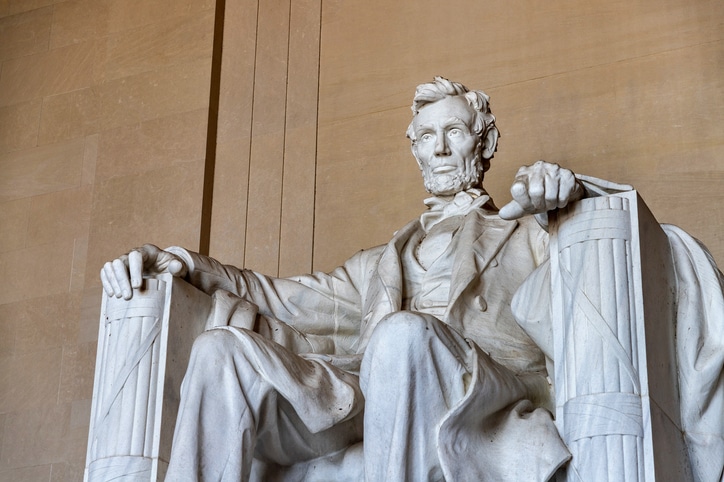
Today marks the 163rd anniversary of President Lincoln’s signing of the False Claims Act (FCA) into law on March 2nd, 1863. The FCA was a visionary piece of legislation that empowered insiders (whistleblowers) to report fraud in government contracting.
Passed during the Civil War, the False Claims Act was designed to stop defense contractors from cheating the Union Army by selling defective goods and overbilling the government. These lawsuits, known as qui tam actions, allow whistleblowers — referred to as “relators” — to share in any financial recovery.
More than a century later, the law remains central to fighting fraud in defense contracting, healthcare, pandemic relief programs, and other federally funded initiatives.
While the False Claims Act was weakened by amendments in 1943, Congress dramatically strengthened the law in 1986 through bipartisan reforms led by Senator Charles Grassley (R-Iowa).
Through the 1986 amendments, Congress strengthened the False Claims Act by increasing incentives for whistleblowers to file lawsuits alleging false claims on behalf of the government.
The 1986 amendments increased financial incentives and protections for whistleblowers, making it more viable for insiders to report fraud. Under the revised law, successful whistleblowers may receive between 15% and 30% of the government’s recovery.
Kris Kolesnik, a veteran federal oversight official who spent 19 years as senior counselor and director of investigations for Sen. Grassley, played an instrumental role in drafting the 1986 reforms.
Kolesnik recalls that the amendments shifted the focus from legally overpriced defense parts to prosecuting outright fraud, such as contractors supplying inferior or defective equipment. He also describes the intense opposition the reforms faced from the Justice Department and business groups, and how public outrage over defense procurement scandals ultimately propelled the legislation forward.
Whistleblower, or qui tam, lawsuits now account for a substantial share of False Claims Act cases filed each year. In many cases, the Department of Justice (DOJ) intervenes and takes over prosecution. In others, whistleblowers proceed independently.
Since the 1986 amendments took effect, the FCA has generated more than $85 billion in recoveries for taxpayers between 1987 and 2025.
In fiscal year 2025 alone, the Department of Justice recovered a record $6.8 billion under the False Claims Act. This is the largest amount ever recovered in a single year in the law’s 163-year history.
More than a century and a half after its passage, the False Claims Act remains one of the most effective anti-fraud statutes in American history. By empowering whistleblowers and incentivizing accountability, Lincoln’s Civil War-era law continues to protect taxpayer dollars and deter fraud across federal programs.