The National Whistleblower Center (NWC) called on foreign governments to strengthen whistleblower protections and financial incentives during an address at the 13th Session of the Conference of the Parties to the United Nations Convention Against Transnational Organized Crime (UNTOC COP13).
The conference took place from October 19-23 in Vienna, Austria. It brought together government delegates, United Nations officials, and civil society organizations to address international responses to organized crime.
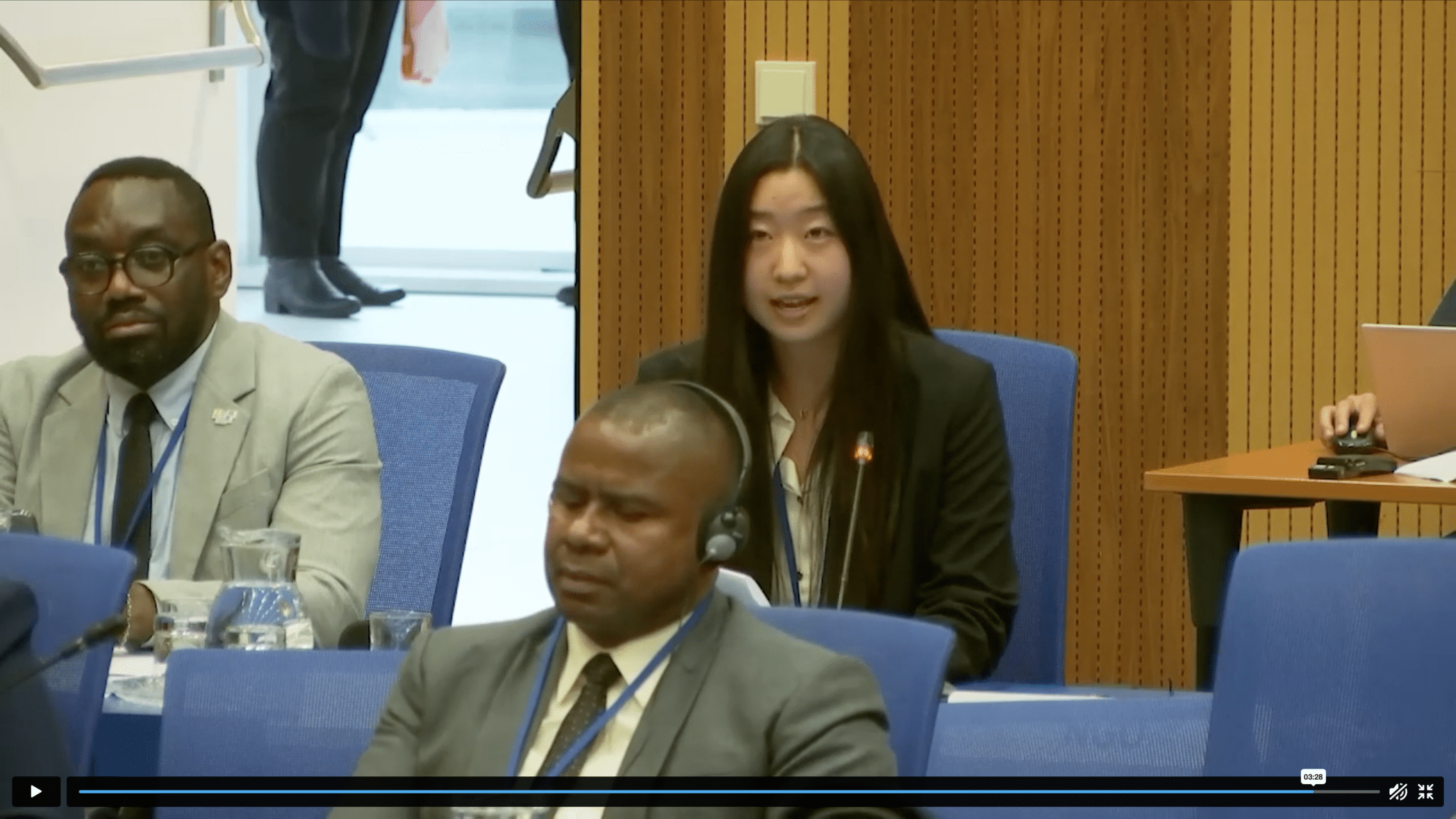
Jeana Lee, the Program Manager of NWC, delivered the remarks during a plenary session where she stressed that insiders are essential to uncovering human trafficking and other cross-border offenses.


“Insiders are in the best position to discover and accurately report crime, but there needs to be incentives and guaranteed protections for these insiders to be willing to take the risk,” Lee argued.
Addressing delegates, Lee stated that governments already have the tools to encourage people with firsthand knowledge of wrongdoing to come forward: transnational laws that protect whistleblowers and reward their assistance in successful enforcement actions.
The address connected whistleblower incentives directly to the conference’s discussion on human trafficking. Its central argument was that better enforcement depends on access to information and that people who possess that information are more likely to report it if there are incentives.
Financial rewards can help address the economic consequences of reporting wrongdoing, while protections against retaliation can reduce the professional and personal risks. NWC presented these measures as complementary parts of an effective anti-crime strategy.
The speech also highlighted the international reach of U.S. whistleblower programs. Foreign nationals may qualify for rewards under applicable laws when their information concerns violations within those programs’ transnational jurisdiction. According to Lee, limited awareness prevents countries and potential whistleblowers from fully utilizing these tools. Lee urged governments both to engage with existing laws and to consider adopting comparable systems domestically.
While commending the United Nations Office on Drugs and Crime for helping countries develop whistleblower policy frameworks, Lee argued that financial incentives deserve greater attention. Her speech pointed to reward initiatives in the United Kingdom and South Korea as examples of growing international interest, while stressing that such programs should also be accessible to developing nations.
NWC’s advocacy extended beyond the plenary address. On October 21, the organization hosted a conference side event on international cooperation against money laundering and illegal offshore banking. Featuring leading whistleblower attorney Stephen M. Kohn and Royal United Services Institute researcher Eliza Lockhart, the discussion examined the effectiveness of transnational whistleblower laws and cross-border cooperation.
Together, the address and side event advanced NWC’s position that whistleblower protections and rewards should be integral to international efforts against organized crime. The speech closed by urging governments and civil society to learn how these laws work and incorporate them into their enforcement strategies.
“But the first step is education,” Lee stated.