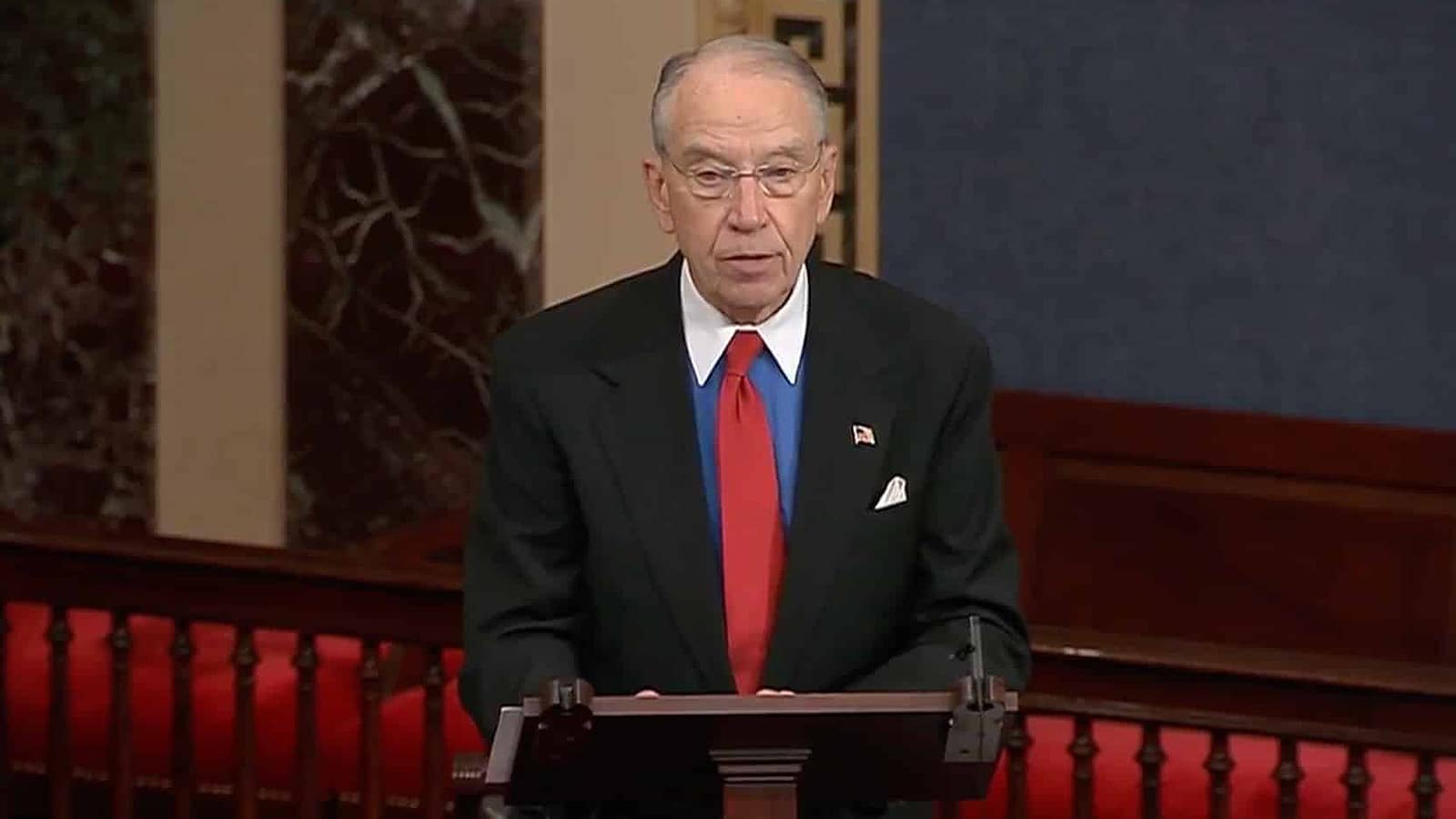
On January 28th, the Senate Committee on the Judiciary held a hearing on “Review and Reform: The Foreign Intelligence Surveillance Act and Executive Accountability.” The hearing addressed the upcoming expiration of Section 702 of the Foreign Intelligence Surveillance Act (FISA) and concerns about protecting Constitutional privacy rights alongside providing national security information.
According to Ranking Member Dick Durbin, “Section 702 allows the government to collect communications of foreigners located abroad without a warrant or court order for the purpose of conducting foreign intelligence.” He says that the section is valuable, but the government has historically used it to collect Americans’ private communication, in violation of the Fourth Amendment.
Led by Chairman Charles Grassley, the hearing discussed reform mechanisms and debated requiring warrants for Section 702 inquiries. Grassley’s opening statement called for ongoing congressional oversight of the Foreign Intelligence Surveillance Courts and for bipartisan court Amici, or independent experts who provide legal perspectives on privacy.


Senator Grassley, a longtime supporter of whistleblower protection, also included the importance of protecting intelligence community whistleblowers in his opening statement. He stated, “Whistleblowers from the intelligence community shouldn’t be limited to providing protected disclosures to just the intelligence committees. Whether whistleblowers want to disclose classified or unclassified information, they should have the ability to speak to other congressional committees.” Sen. Grassley remarked, “For example, the Judiciary Committee has broad jurisdictional reach into the intelligence community. And for many years I’ve worked with intelligence community whistleblowers.” The opening statement concluded, “Making whistleblower laws even more clear is a priority.”
This advocacy aligns with Sen. Grassley’s continuous support of whistleblower protection policy. In the fall of last year, ten Federal Bureau of Investigation (FBI) whistleblowers secured compensation agreements with Sen. Grassley’s support. He opposed FBI retaliation techniques and introduced the FBI Whistleblower Protection Act in July 2025. In August of last year, Sen. Grassley called on Customs and Border Protection (CBP) to hold accountable officials accused of whistleblower retaliation and to investigate those who engaged in it. In May, Sen. Grassley introduced the AI Whistleblower Protection Act, aiming to provide explicit protections for employees who make disclosures and provide relief upon retaliation.
Whistleblower advocates applaud Sen. Grassley’s comments, stating that it’s necessary for laws protecting whistleblowers to be clear, especially for those in the intelligence community.