
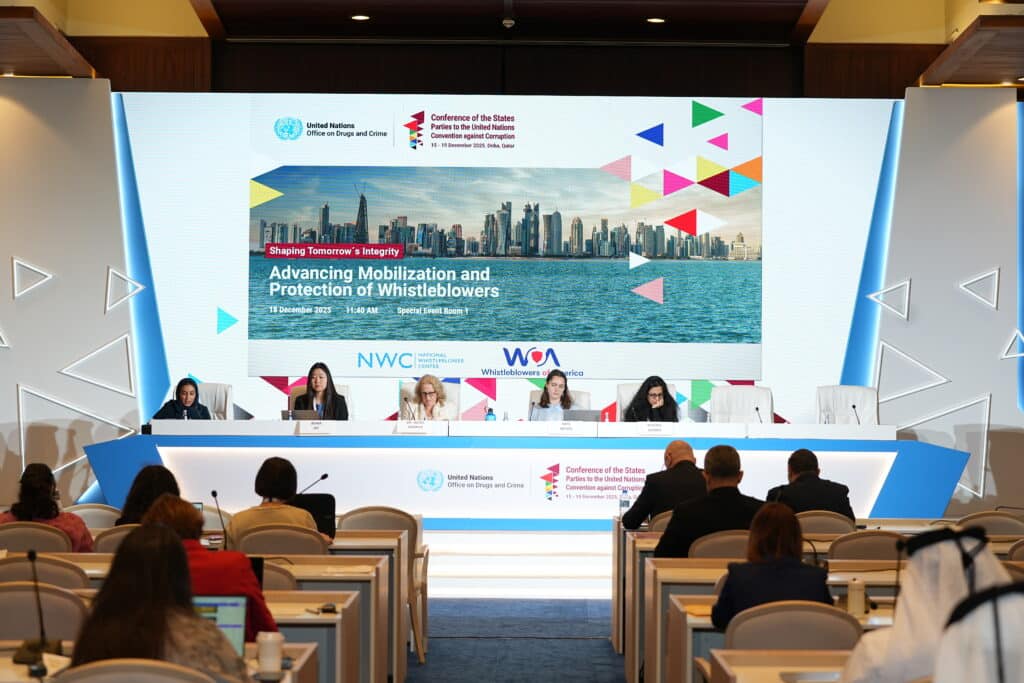
The National Whistleblower Center (NWC) brought together experts from legal, non-profit, and journalism sectors at the 11th United Nations Anti-Corruption Conference in Doha, Qatar.
The panel, called “Advancing Mobilization and Protection of Whistleblowers for Accountability,” showcased effective, proven ways to combat corruption through whistleblowers while protecting them from retaliation.
The side event was part of the conference’s “Uncovering Corruption Day,” which featured panels on topics such as building an ecosystem to combat corruption and protecting whistleblowers in small island nations. The day centered on informing the public about the essential role whistleblowers play in shedding light on corruption and how different actors can work with them.
Stephen M. Kohn, a leading whistleblower attorney and NWC’s Chairman of the Board, opened the discussion by highlighting how transnational laws protect and incentivize whistleblowers. He explained that through his experience working on groundbreaking international whistleblower cases, these laws have encouraged whistleblowers to uncover billions of dollars in financial crime.
Kate Reeves, the NWC’s international liaison, detailed how transnational whistleblower laws work and can be used to prosecute money laundering and foreign bribery. US whistleblower policy models that offer financial compensation and confidentiality have generated $52.7 billion in recoveries, she said.
“Failing to fully mobilize whistleblowers – the known best source of inside information on grand corruption – is to fight a war against corruption without deploying our most effective weapon,” said Reeves.
Thousands of non-US citizens from over 135 countries have become informants to US authorities about bribery in their home countries, Reeves added. Seventy-one percent of all US Foreign Corrupt Practices Act sanctions have been targeted at companies headquartered outside the United States.
Reeves argued that States Parties can benefit from these successful laws by adopting similar whistleblower programs that will significantly increase their detection and prosecution of crimes related to corruption.
Jackie Garrick, Founder of Whistleblowers of America, shifted the discussion to the personal toll, sharing her own experience and examining the mental health impacts of whistleblowing.
“Corruption creates victims whether we see it or not. This victimization requires disability policies and strategies to make them whole,” said Garrick.
Khadija Sharife, a Yale University Global Justice Fellow and former global journalist with the Organized Crime and Corruption Reporting Project, closed the panel by noting that weak disclosure protection worldwide creates ethical dilemmas for journalists using whistleblower information.
The NWC said it will continue pressing for the adoption of best-practice whistleblower laws as a cornerstone of a robust anti-corruption regime.