
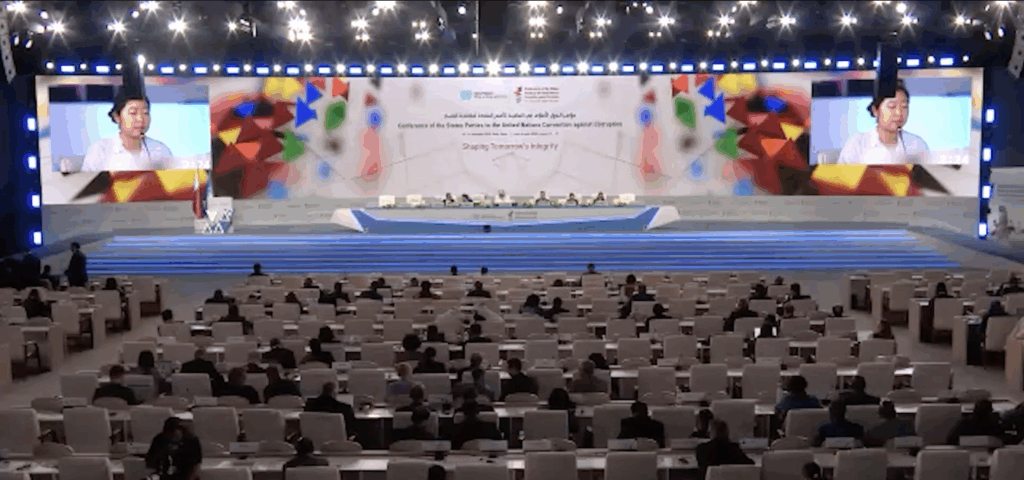
The 11th Conference of the States Parties (CoSP 11) to the UN Convention Against Corruption (UNCAC) wrapped up today after a week of discussions among state parties and NGOs on anti-corruption strategies.
NWC program manager Jeana Lee and international liaison Kate Reeves met with state parties and civil society groups to push for better whistleblower protections and stronger anti-corruption laws. Reeves spoke at the 6th plenary session, urging state parties to fix ongoing gaps in whistleblower protection laws.
The NWC also hosted a side event “Advancing Effective Mobilization and Protection of Whistleblowers for Accountability,” led by Lee.
The week ended with Lee’s speech at the 9th plenary session, where she shared proven successful frameworks and encouraged their adoption. “We are at a turning point in combating transnational corruption,” declared Lee.
Lee explained that laws that effectively protect cross-border whistleblowers and enforce prosecutions already exist in the US and cover transnational crime. Together, the Dodd-Frank Act and Anti-Money Laundering Act target bribery of foreign government officials, fraud in the international securities and commodities markets, sanctions violations, and illegal bank secrecy. Other US whistleblower laws, such as the Foreign Corrupt Practices Act and the Anti-Money Laundering Act, offer full confidentiality and security for whistleblowers while achieving major prosecutions of powerful, multinational corporations.
Empirical data from the past 15 years show that these laws are the most effective tools for detecting and sanctioning illicit actors, with over $25 billion in sanctions and $14 billion in sanctions funding provided to global law enforcement agencies to bolster prosecutorial efforts. While the achievement of these laws as an anti-corruption strategy speaks for itself, Lee emphasized the value of confidentiality protections and incentives for whistleblowers, regardless of nationality.
While these frameworks have been in place since 2010, most state parties have not implemented them, nor are NGOs and human rights defenders aware of how to use them. Many covered whistleblowers are unaware of their rights and face subsequent retaliation. Lee strongly advocated for adopting these best practices and encouraged efforts to raise awareness among whistleblowers worldwide about the protections available to them.
“Strong whistleblower and anticorruption laws must be utilized worldwide, or corruption will continue to undermine democracy, enable environmental degradation, and exacerbate global inequities,” Lee concluded.
The organization plans to continue pushing for international adoption of these frameworks at future UN conferences.