
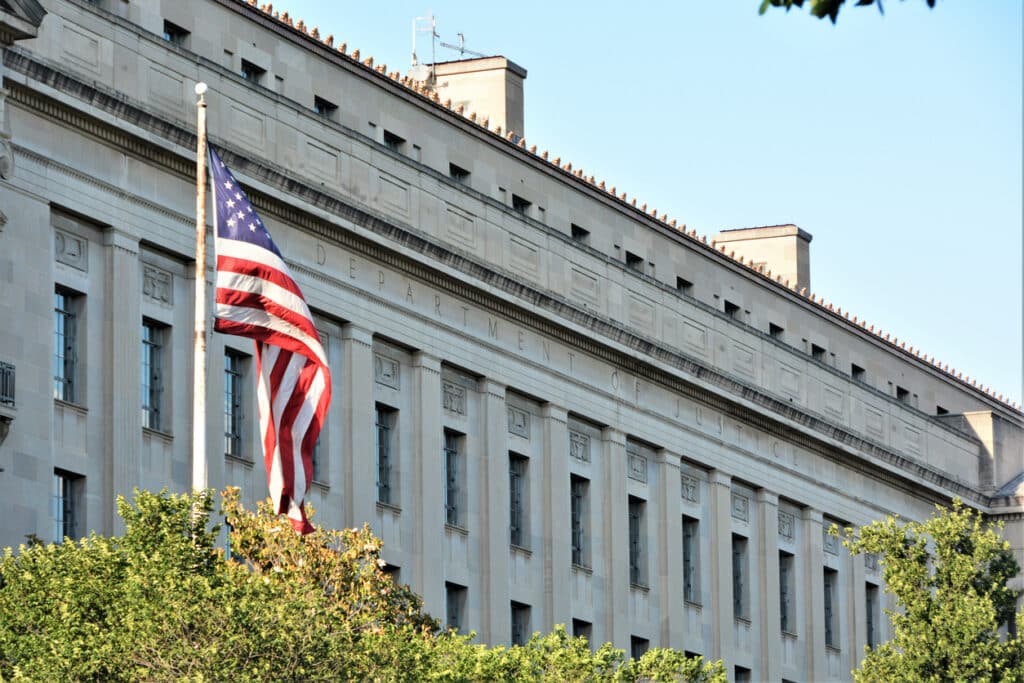
On July 8, 2025, the Department of Justice Antitrust Division announced the creation of a whistleblower rewards program, providing an avenue for whistleblowers to be eligible for monetary awards for reporting antitrust crimes for the first time. The Department of Justice (“DOJ”), in conjunction with the United States Postal Service (“USPS”), investigates and awards antitrust whistleblowers to incentivize reporting and deter future crime. In order for the violation to qualify, the antitrust crime must also harm USPS property or revenue. A Memorandum of Understanding between the Antitrust Division, the Postal Service, and the Postal Service Office of Inspector General, provides USPS with the authority to award whistleblowers, and details the following program procedures. Whistleblowers who provide voluntary, original information for an antitrust violation with a fine of at least $1 million, are eligible to receive 15-30% of the total recovered criminal fine. DOJ officials conduct intake and investigate whistleblower reports to determine if they constitute an eligible criminal violation, and provide information to Postal Service officials who decide if the violation reasonably affected the Postal Service.
After investigations, the DOJ can consult USPS to determine the reward amount, but retains sole discretion. Whistleblower reward amounts are determined by criteria such as how reliable, complete, extensive, and effective the report was. After rewards are assessed, the Postal Service retains one-half of the amount remitted to the Postal Service and awards the whistleblower the other half. This allows lost revenue to be returned to USPS, while awarding whistleblowers who alerted them to fraud in the first place.
Antitrust crimes include: “price fixing, bid rigging, market allocation, and monopolization, including conspiracies and attempts to monopolize.” Price fixing is, “an agreement among competitors to raise, fix, or otherwise maintain the price at which their products or services are sold.” Bid rigging occurs when “competitors agree in advance who will submit the winning bid on a contract that a public or private entity wants to award through a formal or informal competitive bidding process.” Market allocation consists of “agreements among competitors to divide the market among themselves.” Lastly, monopolization occurs when a company demonstrates “an intent to acquire or maintain monopoly power in a market via anticompetitive or exclusionary conduct.”[1]
Six months after the program began, on January 29, 2026, the DOJ announced its first ever award of $1 million, and collected a $3.28 million fine. An international corporation, EBLOCK Co., was charged for “shill bidding” and bid-rigging. EBLOCK, an online used car buying platform, failed to investigate instances of fraud when acquiring Company A. Company A, another online used car buying platform, conspired with Company B to eliminate competition for used vehicles and place false bids to increase the sale price. Companies A and B used the U.S. Mail to send documentation to facilitate the scheme, giving the necessary jurisdiction for the Post Office to provide an award. The whistleblower was essential to alerting both the DOJ and USPS to the fraudulent activity. Incentivizing speaking up with a monetary reward helps to uncover economic crimes that would ordinarily go undetected.
According to leading whistleblower experts, the program’s forward momentum will be highly beneficial for the future of whistleblowing and reduction of antitrust crimes. Whistleblower attorney Benjamin Calitri said of the program that “it is very promising that DOJ Antitrust Rewards Program issued an award so quickly. This gives confidence to whistleblowers considering using the program, that their information on antitrust violations will be investigated and that awards will be paid.” Whistleblowers are an integral component in alerting officials to illegal economic activity, so it is important they are incentivized to report in the face of potential retaliation and career loss. The program demonstrates the importance of whistleblower rewards, and will deter future antitrust violations.
[1] Federal Antitrust Crime: A Primer for Law Enforcement Personnel, 1 (Department of Justice 2023), https://www.justice.gov/atr/page/file/1091651/dl?inline.